

Read, Reflect and Grow:
Ignite Healing and Self-Reflection
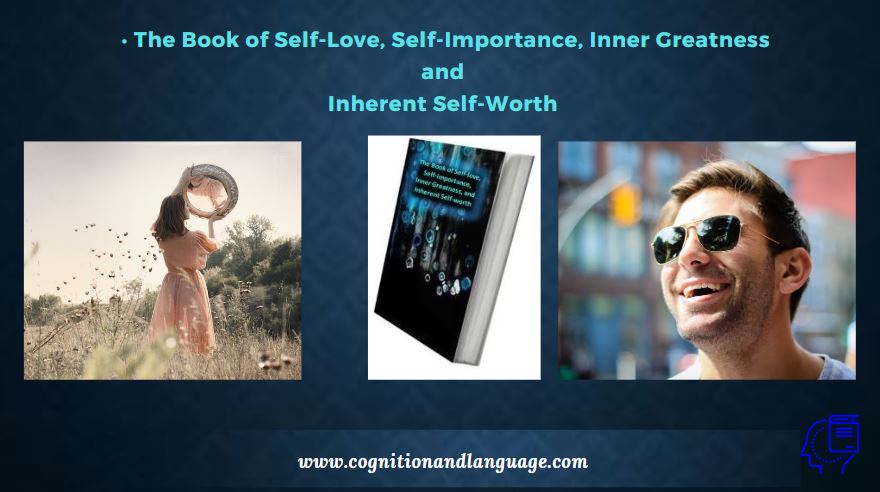
🫀The Book of Self-Love, Inner Greatness, and Unshakeable Self-Worth
This isn’t just another collection of feel-good affirmations.
This is a counterbalance.
A recalibration.
A return to Self.
🌿 What This E-book Is Not
Let’s be clear — this isn’t a random list of affirmations slapped together to make you feel better for five minutes. There are plenty of those out there.
This book is different because it’s built on precision, depth, and truth — by identifying the core wounds and fears that shape your inner experience.
These core wounds and fears create internal distortions — a lens through which we perceive everything.
They colour everything: how we see ourselves, how we interpret the world, and how we imagine our future.
If that lens is cracked by unprocessed wounds, everything you look at is filtered through fear, self-doubt, and pain.
🧠 The Five Core Wounds
I am not worthy I am not capable I am not important I am not good enough I am not enough
😨 The Five Core Fears
Fear of rejection Fear of change Fear of the unknown Fear of failure Fear of loss or lack
These wounds and fears are not just thoughts.
They’re embedded in the subconscious mind, stored in the body, and woven into your emotional and energetic systems.
They drive behaviours like people-pleasing, self-betrayal, over-tolerance, and freezing in the face of opportunity or conflict.
🔄 The Purpose of the Book
This e-book offers a framework for inner recalibration. It works on three interconnected levels:
Spiritual / Energetic — shifting the frequency of your self-concept
Emotional — meeting and soothing your inner child
Intellectual — rewiring the core narratives that dominate your inner dialogue
It doesn’t just affirm your worth — it dismantles the programming that told you otherwise.
This is about transmuting pain into clarity, not denying it.
🛡️ What Happens When You Practise Real Self-Love?
Your tolerance for disrespect and manipulation drops — significantly.
You stop abandoning yourself to meet others’ expectations.
You stop betraying your truth in exchange for conditional approval.
You stop being so damn agreeable.
You protect yourself without guilt.
You begin to project your true self outward — clearly, unapologetically.
This is not selfishness.
It’s self-honouring.
🧸 Inner Child Work – The Root
Much of your self-image is based on stories you internalised in childhood — stories formed around core wounds and fears.
They were never true.
They were interpretations made by a child trying to make sense of pain.
This book includes 60 unique inner child stories, each mapped to a specific subconscious narrative.
Every story comes with a framework to help you recognise it, challenge it, and replace it with an empowered, truthful perspective.
🖋️ What You’ll Receive
The E-book — An in-depth guide to the five core wounds and five core fears
60 Healing Stories — A transformative toolset to rewrite inner narratives
A Journal Framework — To address your healing on all three levels: emotional, energetic, and intellectual
Simplified Affirmation Sets — Ideal for non-native English speakers or anyone who prefers concise, accessible language
⚔️ Protection Against Narcissistic Abuse
Real self-love acts as a shield.
Not always immediately — but steadily, and with lasting impact.
It builds the clarity and inner strength required to recognise manipulation, gaslighting, and control dynamics early.
Narcissists thrive on unhealed wounds — especially the ones we don’t know we have.
This book helps you see through the illusion — and, more importantly, stop feeding it.
🪞 Self-Love ≠ Denial
This isn’t about pretending everything is fine.
It’s not about toxic positivity.
It’s about recognising fear, failure, and rejection — not as signs of unworthiness, but as human experiences that do not define who you are.
This is realistic self-love:
The kind that acknowledges pain but doesn’t let it have the final word.
🕯️ You Take Your Inner World With You
Your inner world is the only thing you carry when you leave this earth.
That world is shaped not just by what happened to you, but by how you responded — and by how deeply you chose to love yourself in the aftermath.
This book is a tool to help you:
Reclaim your inherent worth
See your inner greatness
Honour your importance
And remember what was never truly lost — your Self
🔚 Reflection
If you truly love yourself, you will not abandon yourself ever again.
Not for approval.
Not for temporary peace.
Not for anyone else’s story.
You are not here to fit into somebody else’s narrative.
You are here to rewrite it — and live by your own, free from wounds and fears.
💫
Are you ready to remember who you are — before the wounds, before the stories?







The Book of Self-Love, Self-Importance, Inner Greatness,
and Inherent Self-Worth
Embrace Your Inner Power: A Journey to Self-Love and Inner Healing
This E-book includes Deep Shadow Work Journal and
Gratitude Journaling Section Included (54 Pages, No Lines)
******
Are you ready to explore the true essence of self-love?
Do you find the concept of self-love uncomfortable, associating it with narcissism or vanity?
It’s time to reframe the narrative and embark on a journey that celebrates your inherent worth and inner greatness.
Introducing The Book of Self-Love, Self-Importance, Inner Greatness, and Inherent Self-Worth, an e-book designed to redefine what it means to truly love yourself.
Discover the Depth of Authentic Self-Love
This e-book takes you beyond the surface, diving into the depths of genuine, nurturing self-love. It’s about embracing the essence of who you are—the core of your being that fuels your heart and soul. Through this journey, you’ll discover a self-love that is compassionate, accepting, and understanding, even in the face of your imperfections and vulnerabilities: fears, failures and rejections.
Recognise Your Progress and Embrace Your Wisdom
Self-love isn’t about perfection; it’s about acknowledging your growth, learning from mistakes, and appreciating the wisdom you’ve gained along the way. The Book of Self-Love guides you through this process, helping you cultivate a self-acceptance that is tolerant, forgiving, and ready to embrace you as you are. By following its guidance, you’ll begin to connect with truly unconditional love that is always within your reach.
Heal Your Inner Wounds and Reclaim Self-Worth
Have you struggled with any of the core inner wounds that have left you feeling unworthy or not good enough, not important or not capable? This e-book offers transformative techniques to heal those wounds and re-establish a balanced sense of self-worth. By uncovering your inherent value, you’ll gain the tools to rebuild your confidence and self-compassion from deep within.
Find Balance and Harmony Within
To heal, you must first understand the balance between inner wounds and self-worth. The Book of Self-Love provides a clear roadmap for creating a harmonious internal environment. Through soothing affirmations and positive conceptualisations, you’ll learn how to counterbalance past pain and disappointment. This e-book will guide you toward a life of harmony and balance, where you can thrive and grow safely.
A Journey Toward Wholeness and Greatness
Your inner greatness is literally bursting and waiting to be unlocked and unleashed – as we speak. The Book of Self-Love will empower you to heal, transform, and reconnect with your authentic self. It invites you to explore what it means to truly love yourself and embrace your journey to wholeness. With this e-book, you’ll find the inspiration and guidance to create a life filled with positivity and boundless love that you constantly carry in you.
Unleash Your Inner Strength and Reignite the Flame of Self-Love
Do you think you are ready to embark on this transformative journey? The Book of Self-Love, Self-Importance, Inner Greatness, and Inherent Self-Worth is your closest, deepest companion, offering you a new perspective on self-love and personal growth on a level never seen before.
Gain access to a deep shadow work journal and a gratitude journaling section, designed to help you explore your inner world and maintain a positive outlook.
Inside the E-Book
This e-book delves deep into the realms of self-discovery and self-importance. It’s perfect for those seeking to cultivate a deep sense of self-love and unlock their true potential.
Whether you’re a seasoned advocate of personal growth or just starting your spiritual journey, this e-book provides a comprehensive guide to embracing your unique essence, connecting to it and harnessing the inner power it provides.
- Affirmations and Techniques: You’ll find a collection of thought-provoking chapters filled with powerful affirmations and techniques to help you counter-balance the inner critic, embrace self-compassion, and manifest a life aligned with your true desires.
- Inner Healing and Transformation: Learn how to heal inner wounds, break free from limiting beliefs, harmful conceptualisation and create a balanced internal environment.
- Guidance and Practical Advice: Discover practical advice to help you embrace your authenticity, redefine self-importance, and build confidence – from scratch if you need to.
- Self-Reflection and Shadow Work: Confront the shadows within and address the beliefs that hold you back. This e-book includes a deep shadow work journal, providing 54 pages of questions that will help you uncover hidden aspects of yourself and guide you toward growth.
Join the movement of self-empowerment, self-acceptance, and self-love. Purchase The Book of Self-Love, Self-Importance, Inner Greatness, and Inherent Self-Worth today, and start your journey toward a life filled with your expression and authenticity, self-actualisation, and unwavering belief in your inherent greatness.
Freedom from Inner Limits Created by Wounds and Fears
– Heal Your Inner Wounds and Change the Way you See Fear
Ready to Break Free? Learn How Inside The Book of Self-Love.



All files are available for access and download immediately after purchase.
They are accessible on all types of devices, including mobile phones, tablets, laptops, and desktop computers.
Additionally, there is an optional membership to a Facebook group, where you can receive support, assistance, and advice on every aspect of the cognitive essential files.
By joining, you will also become part of a community of like-minded individuals, enabling you to share experiences and receive the support you need.

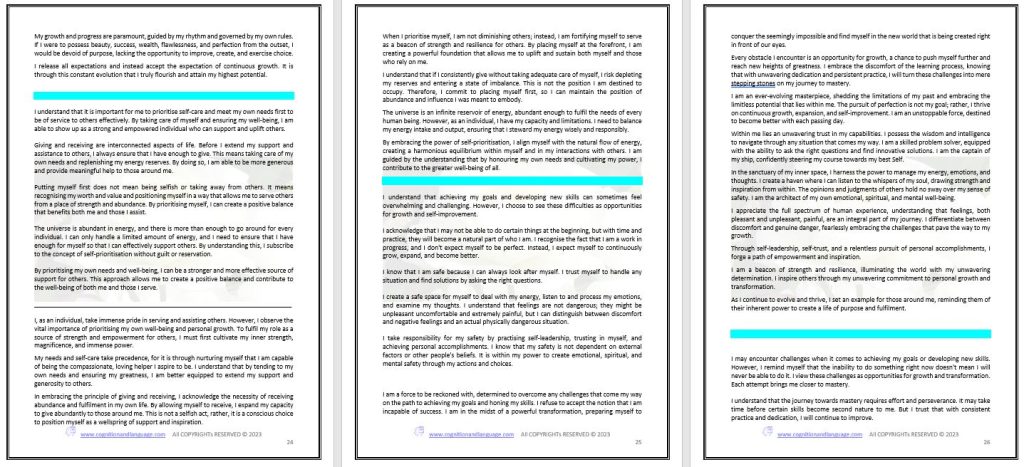
~ SAMPLES – ALL E-BOOKS ~
The Book of Self-love, Self-importance, Inner Greatness, and Inherent Self-worth
(…) – indicates missing content
These are selected excerpts from our eBooks and do not encompass the full content. They offer a glimpse into the book’s format, difficulty level, and writing style. Enjoy.
SAMPLES:
Self – love E-book
I exist in this realm, therefore I am endowed with a profound sense of necessity, desire, relevance, and worth. The universe itself acknowledges my indispensability, for I am deserving of all that I aspire to, as it is inherently mine to manifest.
My ultimate purpose lies in becoming the most extraordinary version of myself, a testament to the divine agenda that transcends the influence of any mortal being.
My inherent worth emanates from the fact that I am an integral part of the grandest creation, sent forth by the very hand of the Creator.
This divine origin saturates me with immeasurable value, affirming that I am deserving of everything necessary to become who I yearn to be and to express my deepest desires with unwavering authenticity.
The measure of my worth lies in my ability to treat myself with utmost care and compassion, diligently safeguarding my well-being on all levels. It is in the way I regard myself, embracing a positive self-perception and nurturing a profound sense of self-love.
The thoughts and emotions I cultivate about my being are a testament to my worth, reinforcing the inherent greatness that resides within me. ….
As a co-creator, I understand that making mistakes is a natural part of the creative process. Perfection does not exist, as everything is in a constant state of creation and change. Instead of striving for perfection, I focus on doing my best in the present moment and utilising my strengths.
Life is like a giant building site, where things are continually evolving. I acknowledge that I have the freedom to make mistakes, learn from them, and engage in both the process of destruction and creation. Failure and success are intertwined, and through trial and error, I have the opportunity to grow and evolve.
Mistakes are not always negative; they are often adaptations to the changing circumstances of life. Dwelling on past mistakes serves no purpose, and I am committed to making better choices moving forward. The past does not define the present or dictate the future.
Each mistake I make is an invaluable learning experience that contributes to my personal growth and development. I except these lessons and strive to improve, knowing that the more mistakes I make, the more knowledge and wisdom I gain.
I also recognise that my mistakes may serve as guidance for others, even if I am unaware of the specific individuals they impact. By openly acknowledging and learning from my errors, I provide a compass for those who may encounter similar challenges or face similar decisions.
….
In the past, I have experienced moments of being wrong or redirected, and those experiences have played a crucial role in my growth and development. I have gained awareness, wisdom, and a deeper understanding through those corrections and redirections.
I utilise the power of practice and trust in my ability to always try my best, continuously learn, and evolve. I see opportunities as chances to expand myself, to become bigger, better, smarter, and more aware.
Life is akin to living on a vast building site where constant change is the norm. In the process of creating, mistakes, messes, failures, and even destruction can occur.
However, I permit myself to engage in the act of creation and co-creation, knowing that learning is an integral part of the journey. I am open to receiving guidance and discovering better ways for both myself and others.
I have confidence in my pure intentions and rely on my inner energy to guide me along the path of creation.
While creating, my focus remains on who I am becoming rather than dwelling on what went wrong.
I direct my attention towards the ultimate outcomes of my creations and what works perfectly for me. I trust in my power to make wise choices, and even if I make mistakes along the way, I have the ability to determine what is right and adjust my course accordingly.
….
Every obstacle I encounter is an opportunity for growth, a chance to push myself further and reach new heights of greatness. I embrace the discomfort of the learning process, knowing that with unwavering dedication and persistent practice, I will turn these challenges into mere stepping stones on my journey to mastery.
I am an ever-evolving masterpiece, shedding the limitations of my past and embracing the limitless potential that lies within me. The pursuit of perfection is not my goal; rather, I thrive on continuous growth, expansion, and self-improvement. I am an unstoppable force, destined to become better with each passing day.
Within me lies an unwavering trust in my capabilities. I possess the wisdom and intelligence to navigate through any situation that comes my way. I am a skilled problem solver, equipped with the ability to ask the right questions and find innovative solutions. I am the captain of my ship, confidently steering my course towards my best Self.
In the sanctuary of my inner space, I harness the power to manage my energy, emotions, and thoughts. I create a haven where I can listen to the whispers of my soul, drawing strength and inspiration from within. The opinions and judgments of others hold no sway over my sense of safety. I am the architect of my own emotional, spiritual, and mental well-being.
I appreciate the full spectrum of human experience, understanding that feelings, both pleasant and unpleasant, painful, are an integral part of my journey. I differentiate between discomfort and genuine danger, fearlessly embracing the challenges that pave the way to my growth.
Through self-leadership, self-trust, and a relentless pursuit of personal accomplishments
…
I am a work in progress, and I release the expectation of perfection. Instead, I focus on my personal growth, expansion, and ongoing development.
I find comfort in knowing that I am capable of looking after myself and handling any situation that comes my way. I have confidence in my intelligence and abilities to navigate challenges effectively. I approach problems by asking myself the right questions, which leads me to discover solutions.
I intentionally create a safe space for myself to process my energy, listen to and understand my emotions, and explore my thoughts. My safety is not dependent on the opinions or beliefs of others. I am the sole creator of my emotional, spiritual, and mental spaces and inner well-being.
I understand that feelings themselves are not dangerous; they are simply indicators of my internal state. I differentiate between temporary discomfort and negative emotions and genuine physical danger.
I take responsibility for my safety through self-leadership, self-trust, and self-accomplishment. By empowering myself, I create an environment of safety and security in all aspects of my life.
…
I am on a path of progress, expansion, and growth, actively creating and shaping the person I am becoming. I release the weight of expectations that limit and disappoint, instead embracing the messy and transformative process of creation.
I wholeheartedly trust in the power of growth, even amidst the discomfort and uncertainty of the unknown. For it is through challenges that mastery is born, and every great master was once a perceived disaster.
Mistakes hold no power over me, for I fearlessly welcome them as catalysts for my personal growth.
Each misstep propels me forward, making me more resilient, more knowledgeable, and more capable. I choose authentic self-expression and the discovery of my true identity over the facade of perfection.
I courageously acknowledge that I am continuously growing stronger, shedding the shackles of weakness and fear.
I might be far from a final version of myself, for I possess the power to evolve, transcend, and become an even greater embodiment of my potential.
…
The opinions and judgments of others hold no power to shatter or shape me. They are mere reflections of their perspectives, agendas, limitations, and fears, which may be distorted, incomplete, or entirely misguided. Their perception does not define me, describe me, or determine my worth.
The most crucial assessment of myself resides within my realm, for it serves as a compass guiding the state of my inner being. It sets the tone for my day, influences my decisions and choices, and ultimately plays a paramount role in shaping the extraordinary quality of my life. It is a life that I passionately aspire to create—a life of profound greatness.
The thoughts of others, being subjective and diverse, hold no authority to govern or influence the inner sanctuary of my well-being.
…. I relinquish the need to judge the value, relevance, or significance of my contributions. They possess the power to resonate deeply with some and hold little relevance for others. The reception, implementation, and impact of my words and actions are not within my control. I trust in the higher power to distribute and amplify the essence of my message, allowing it to support those who are in need.
The magnitude of the work I undertake extends far beyond my perception. It encompasses a vast reach, transcending boundaries and leaving an indelible mark. My expression is not solely for my judgement but also for the benefit of individuals I have yet to encounter—people whose stories, needs, and aspirations remain unknown to me.
Mistakes and failures are an inherent part of my role as a co-creator, collaborating with the very essence of creation itself. Perfection is an illusion, for the world around us is in constant flux, ever evolving.
It is not my duty to strive for flawless execution, but rather to wholeheartedly devote myself to doing my best in the present moment, utilising my innate strengths.
We reside within a grand construction site, where change is the only constant. I bravely take the opportunity to stumble, fail, dismantle, and rebuild. I embark on the journey of experimentation, creation, and triumph. It is not always about making mistakes but rather adapting to the perpetual transformations that surround us.
Past errors are confined to the records of history. Repeated missteps are a conscious choice, one that I am resolute in avoiding. The past does not dictate the present, nor does it determine the trajectory of the future.
…
I stand firmly in the realisation that I am the custodian of my power and control. They are not external forces that can be taken away from me; they are inherent aspects of my being. I hold them within me, and they can never truly be lost.
It is my journey to reclaim the power I may have inadvertently given away as a child or adult, to rediscover my inner strength and regain the control that rightfully belongs to me.
I understand that resisting this truth only serves to further diminish my power, whereas embracing it allows me to unleash my full potential.
I wholeheartedly support the idea of a mindset of non-resistance, recognising that true power lies in aligning with what is right and what serves my highest good, regardless of the circumstances I find myself in.
The pursuit of control, contrary to common belief, often becomes a self-imposed barrier that restricts my growth and limits what I can achieve. By relinquishing the need for control, I open myself up to a world of boundless possibilities, where my true potential can flourish.
….
I am filled with unwavering faith in the highest, greatest power that transcends my limited abilities. There is a purpose woven into the fabric of my existence, a purpose that is meant to guide and uplift me rather than tear me down. I believe wholeheartedly in this divine agenda that is tailored to my unique journey.
Every experience that unfolds in my life, both the joyful and the challenging, is intricately designed to serve me. I trust that these experiences are not random or haphazard but rather intentional and purposeful. They are meant to awaken my inner strength, nurture my resilience, and provide me with opportunities to make conscious choices and co-create my reality.
With this perspective, I accept each twist and turn, every triumph and setback, as stepping stones on the path to self-discovery and growth. I see even the most difficult circumstances as opportunities for transformation and empowerment. They push me to tap into hidden reserves of strength and wisdom that lie within me, enabling me to rise above any challenges that come my way.
I understand that I am not alone in this journey. The highest, greatest power that I believe in is always with me and in me, guiding and supporting me in every moment. I surrender to this divine guidance, trusting that it will lead me towards my highest good. I am open to receiving the signs, synchronicities, and messages that are meant to guide me on my path.
SEM E-BOOK
_____________________________________________________________________________________
SELF
Hungry
Coachable
Willing (committed)
Trust (trustworthy and trust–evoking)
Self–belief / Self-trust / Self–worth
Confidence (also in the systems/methods)
Energy/vibrations
Inspiration
Intentions
Spiritual growth/expansion
Awareness and expanded consciousness (resonating)
Values (unshakable)
The right set of beliefs – supportive and positive
Meeting their own needs
Using their superpowers
Are you “hungry”? Willing? Coachable?
How Self – aware are you?
How connected to your inner self are you?
Do you know your values?
How do you grow spiritually?
Do you have non-negotiables?
Do you meet all your inner needs?
What energy do you project?
What kind of cognition do you have?
What kind of language do you use?
______________________________________
You will become a lot more self–aware
You will have a strong connection with your inner energy
You will meet all your inner mental, emotional, spiritual, social and financial needs
You will develop strong values and share them with others
You will be able to project positive energy on others and the people around you
You will have non-negotiables
You will develop a strong sense of self-worth, self-value, self–belief
You will become really strong and confident
You will be aware and in charge of all 5 pillars of your inner energy
COMMITMENT
Action
Execution
Consistency
Persistence (same vision)
Perseverance
Dedication
Developing:
Self – trust, Self–belief
How committed are you to your: vision, passion, people, reality, creating your future, and materialising your vision?
How do you show up every day?
How consistent are you?
Do you trust others to be committed?
Do you hold yourself accountable?
How do you hold others accountable?
______________________________________
You will be able to commit to your people, to your vision
You will be able to encourage others to commit
You will be more persistent, you will insist on more, and you will demand better
You will be a lot more consistent
You will hold people accountable
– What or who do you want to inspire you?
– What do you want your posture like when you express yourself?
– How do you move when you are your authentic self?
– How do you act when you are in alignment with your purpose?
– How do you feel when you can show up as your true Self?
– What thoughts do you choose to have as an authentic Self?
– What energy do you want to project / what energy do you want to attract and what vibrations do you want to have/absorb?
– What voice does your inner Self have?
– What sounds do you make and what kind of sounds are you aligned with?
Do you feel and think in harmony? Are your thoughts and feelings and what you say in agreement?
– Does your body feel in agreement with your emotions and your thoughts?
– Get rid of your emotional and intellectual limitations. (your mindset is based on limits – you are limitless)
– How would you think without this limitation?
– How would you feel without these limitations?
– What would you do without these limitations?
The 5A framework to release unwanted energy: acknowledge, assess, ask, address, act
What new energy will you attract?
What new energy will you absorb?
What new energy will you project?
What does your new energy feel like?
feelings, emotions, memories, experiences, residual energy
people, activities, events, places, objects, actions
What will you keep in your energy? What will you transform and what will you keep?
Align your energy with your emotions and feelings) with your body and your mind.
– What emotions and feelings will make you move forward?
– What emotions and feelings will make you grow, progress and make you wiser?
– What would it be like to have no emotional blockages? What will you do, think and act? How would you feel?
– What would it feel like if you did not take your emotions and feelings so personally? What would it feel like if you allowed your feelings to flow and focused on the feelings you want to feel, want to keep and experience?
Generate / Project / Feel / Experience
Observing, absorbing and projecting:
– What new energy/emotions will you attract?
– What new energy/ emotions will you absorb?
– What new energy will you project/manifest?
Create a new emotional space
– What would your emotional space feel like?
– What emotional state will you create?
– How will you create them?
– How will you deal with your emotions and feelings differently?
Creating spaces
– Do you have inner spaces?
– Do you have an internal space…
to face your challenges
to address any issues
to process your emotions and feelings
where you can express your emotions and analyse your thoughts
where can you project the energy you want to attract and experience?
– A space where you can meet all your mental, emotional and spiritual needs, and increase your inner capacity to cope with challenges?
– Expression
– Are you able to express yourself fully and freely?
– How do you express your inner world currently? – your energy, your emotions and feelings and your thoughts? How do you express your vision of your future Self?
– How would you like to express yourself? What is your best way to express yourself?
– What wants to manifest? What energy wants to materialise?
– Are you creating your own identity through your expression or by following others?
– What are your ways of manifesting and expressing your inner Self?
– What are the ways that you would like to manifest your inner sphere?
EMOTIONS AND FEELINGS
– you need to know how to identify and describe your feelings and emotions – but not identify with your feelings and emotions (you are not your emotions)
– you need to know how to connect to your feelings and emotions – guidance, messages and functions, growth, wisdom and protection
– know where emotions are coming from – their source and be able to alter it, to understand how emotions and feelings are being created + materialisation process – manifestation
– your inner child’s feelings and emotions trapped in your energy field – unprocessed emotions and feelings
– distinguish between types of emotions – residual, inherited and trapped – someone else’s emotions and feelings
– know the messages and possible functions of emotions (growth, awareness, guidance and protection)
– be aware of harmful defence mechanisms you might be using to deal with unwanted emotions and feelings
– you need to know the ways emotions and feelings relate to and interact with your energy and your body – you need to be able to connect to your emotions and feelings and synchronises them with your mind and your body
– you need to know the laws of your inner energy and the laws of emotions to deal with them correctly
– know how to process your feelings and emotions correctly – the 5A framework and release them so they no longer impact your current emotional state, your emotional well-being, perception, decision and choices you make NOW
– you need to know what impacts your emotional state, your emotional well-being and what / how it impacts your feelings and emotions – what triggers your emotions?
– you must be able to transform your feelings and emotions into something you want to experience
– you need to be able to distinguish between absorption, observation and projection of emotions and feelings – project the emotions you want to experience (our energy assumes that we know what is good for us and manifests that for us) the mind does not know anything else but to protect us – it is a tool!
– you need to be able to create emotional space for yourself
– you should be able to address your emotional challenges
– you must meet all your emotional needs
– you must increase your emotional capacity to cope with challenges
….
Mental needs
MENTAL / INTELLECTUAL NEEDS:
– construct your reality in your mind – improve problematic conceptualisation
– expansion – more knowledge and awareness – linear and exponential
– to be able to able to express the inner energy with your mind – identify, describe and express your inner energy in the form of thoughts – without being judged or without feeling stupid
– to satisfy the need to understand – linear and exponential types of growth
– to improve our cognition and manage cognitive processes
(Improve your core conceptualisation, and correct any cognitive distortions, imbalances, inconsistencies and biases)
– to control our thoughts and our mind – our focus – to be able to observe your thoughts, address them – question them and produce language we want to use / experience (positively charged – with higher vibrations) to be aware of your meta – programmes and to be in charge of your focus)
– to project energy using our mind – to be able to transform your energy into something you want to experience in your life
– to create with our mind – better decisions, better choices, more opportunities and options, more possibilities – to manifest greater things in your reality
– to find solutions to our problems and problems of the others – to use your inner resources and your inner power
– to find the answers to your questions – ask better questions, control and manage the three layers of your cognition, use your mental superpowers; to be a great problem-solver
– to express ourselves, to choose the language we want to use and the language that serves them
– create a safe, mental space for expressing and testing your thoughts
Mental capacity
MENTAL CAPACITY
How do you increase mental capacity?
Meet all your mental needs, become more aware of your energy – and remove energetic, emotional and mental blocks – including cognitive distortions and limiting beliefs from your inner sphere.
You will increase your mental capacity if you…
– you understand your thinking and how the mind works
– you distinguish and master the distinction between entertaining, observing and manifesting/projecting your thoughts
– understand your mindset: meta-programmes, cognitive distortions and biases, also – limiting beliefs and your cognitive capacity
– understand the dichotomy behind thinking
– learn how to transform negative thoughts into positive ones that are based on the future
– understand how thoughts materialise – the process of materialisation
– create your personalised mental space
– meet all your mental needs
– understand how the ego developed by your mind impacts your whole mindset
– understand how thoughts are created
– know what triggers your thinking
– recognise and deal with any unhelpful mechanisms used to deal with negative or uncomfortable thoughts
– how to synchronise your mind with your energy and your body
Create your mental space. Create mental space for yourself to…
– observe your thoughts / to process them correctly
– to ask the right questions and expect the answers from your mindset
– to develop a greater understanding of your mind and how it works – your thinking habits and patterns
– to create a desired, custom-made mental pocket
– to influence and impact your inner energy and your body (somatic data) with your mind
– to verbalise your vision/ your future – put it in thoughts and then the language
– to choose better language to communicate with yourself – higher vibrations are a lot more supportive and helpful
– to allow the mind to provide the answers and solutions you are looking for
What are your thoughts triggered by?
– common field energy
– residual energy
– inherited energy
– the energy of a particular object
– other people’s energy
– activities
– actions
– processes
– thoughts
– the language used and specific words
– emotions and feelings
– somatic/sensory data
– the environment you are living in currently
– experiences and memories
Current energy and its impact – What does your current energy cost you? What is missing? What could be transformed in your life? – What does it do to others around you? – What does it do to your environment / what does it manifest? – How does the energy make you feel? – What does your energy state create in you (emotions, thoughts)? What does it manifest? – What spiritual state does it produce/create? – emotions, thinking, physical well-being and actions/behaviours? – How does your energy impact your body, your emotions and your mind? | Transformed energy and its impact – What is the opposite of your energy? Focus on the positive in your energy and “grow it” – focus on it. – What would you gain if you had higher-vibrating energy? Do you know someone with a really high level of energy? Who is it? How would you replicate their energy? – How will you generate higher vibrations? – Better energy, higher vibrations, better results, more control, safety and power. – What will you create with energy? – your vision? – your purpose? What will it manifest? – What would you do with your higher energy? – How would you feel with higher energy? – What would you think with higher energy? |
Current energy: Step 1: Visualise / identify Step 2: Conceptualise / manifest Step 3: Process/address Step 4: Release/address The 6 E framework: Expose explore experience express exchange eliminate – what will you expose? – how will you identify and name it? – how will you process it? | Transformed energy: Step 1: Visualise / create Step 2: Conceptualise / imagine Step 3: Express/describe Step4 Project and manifest (action) The 6 E framework: Expose explore experience express exchange eliminate – how will you express it? – how will you transform it? – how will you release it? |
-What is the story behind your energy? – What inherited/trapped emotions and feelings do you have? – What do you think about your energy? What stories do you have about your energy? What does your energy project / manifest in your thoughts? – What energy do you absorb with your story/stories? – What energy do you project currently with your story? – What energy do you attract? What energy do you materialise with your story/stories? | – What is the energy behind your new story? – What can you use from your energy? What do you want to keep and what do you want to transform? – What can you use from your past to write a new story and create a desired future? – What energy will you project with your new story? – What energy will you only observe and what energy will you absorb? – New energy, new story – what will you write? How can you increase your vibrations? |
What does the story cost you? – What will you lose with your old story – what energy will go away with it? – What will you have to compromise? – How does the old story make you feel? – what energy does it produce? – How does it impact others around you and your environment? – What does that story create/attract in your life? – What thoughts, feelings and actions does it generate? – What is missing in your story? How does that story stop you? What do you have to sacrifice? | What will you gain from your old story? – What will you gain with your new story? What energy will it produce? – What will you feel like with your new energy story? – How will you feel and what will you think about having a new story? – What will the new story change about your energy? – What will you attract with your new story? What will you materialise/manifest? – What will change with your story? Will it |
55 ways E-book Samples:
Parents and carers often have high expectations for their children, but these expectations can be detrimental if they are not age-appropriate or aligned with the child’s abilities and future goals. Such high expectations can also lead to the child feeling inadequate and triggering the “I am not good enough” wound. Rather than acknowledging their child’s efforts and capabilities, parents may focus on their weaknesses instead of their strengths.
Parents must evaluate their expectations towards their children and ensure they are realistic and achievable. Setting small, achievable goals for children can help build their confidence and self-esteem. It’s important to recognise the uniqueness of each child and nurture their interests and talents. Parents must adjust their idea of success and include their child’s idea of accomplishment.
When assessing a child’s expectations, it’s crucial to ask them what they expect and if their expectations are age-appropriate, relevant, and achievable. Setting big expectations is fine, but parents must also break them down into small, achievable steps to ensure their child can meet them.
Parents should set their child up for small successes every day, helping to build their confidence and self-esteem. It’s important to make sure that the expectations set are worthy of meeting and will provide a sense of accomplishment once achieved.
Parents and carers must re-evaluate their expectations towards their children and ensure that they are achievable, realistic, and aligned with their child’s abilities and future goals. Parents must recognise the uniqueness of each child and nurture their interests and talents while adjusting their idea of success. Setting small, achievable goals will help build their child’s confidence and self-esteem. Ultimately, parents must remember to expect their children to grow rather than growing expectations towards them.
– parents/ carers have too high expectations towards their children, very often they are not helpful to anyone, the expectations are frequently not aligned with the child`s abilities and they are also age- inappropriate, not really applicable at the age of the child, they are not aligned with the child’s future, their future Self
– parents are likely to evoke “I am not good enough” wound without acknowledgement of the effort, capabilities of the child and their circumstances
– the focus is to focus on digging the dirt, rather than digging for gold…
– parents are often driven by the examples of other children and they want their children to be the best only to hurt their child by not recognising their uniqueness and differences which also, most likely, some incredible advantages
Ask your child about their expectations. Assess if their expectations are age-appropriate, relevant, and achievable.
Assess and re-evaluate your expectations toward your child – divide your expectations into small, doable and achievable steps.
Set your child up for small successes every day.
Set big expectations and small expectations – make them doable, achievable, and realistic, and make sure they will be worthy of meeting.
– recognise their uniqueness and nurture their interests and talents.
– adjust your idea of them being successful – include their idea of success
Don’t grow expectations towards your children – expect them to grow.
– what are your current expectations towards your child?
– are your expectations age-appropriate and relevant?
– are your expectations aligned with your child`s future Self?
– are your expectations small enough for your child? Are they achievable?
– are you setting up your child for success or failure?
– what is your reaction when your child does not meet your expectations? – what would you like your reaction to be like?
– do you know your child`s unique skills and abilities?
– do you know what interests and talents they need to develop?
– do you adjust your expectations to the circumstances and the situation of your child? – to their abilities and opportunities they have?
– do you expose the child`s uniqueness regularly?
– do you recognise and appreciate their intentions?
– do you recognise and appreciate their efforts?
– do you ask what their expectations are towards their situation, their circumstances and their future? also: their day, their activities, people around them, and events – what do they expect?
….
Children who are emotionally, spiritually, and mentally neglected, and who are only given attention, recognition, and affection when they behave according to their carer’s expectations, will develop a habit of people-pleasing in order to receive love, safety, and acknowledgement. However, children crave more than just these things; they crave a sense of belonging, contribution, and safety. To achieve this, they need to feel loved, acknowledged, and heard, in order to build a strong identity and confidence while growing up. Safety, love, and recognition are the three fundamental needs of babies.
One way to ensure your child feels loved and acknowledged is to show love and affection when they are being themselves, even if they are not pleasing you. It’s important to recognise your child just for being a child and praise their voice, choices (if reasonable), and decisions (if safe). Children need to know that they don’t have to please anyone in order to receive affection, love, recognition, and safety. Providing these things to a child is the bare minimum.
It’s important to tell your child that they do not have to please anyone else. They should be satisfied with their own choices, decisions, and expression of their identity. While it may make someone else happy, it is not compulsory to be accepted, acknowledged, and heard by everyone. By helping children understand this, they can learn to focus on their own happiness and not feel the need to please others.
Children need more than just love, recognition, and safety to thrive. They need to feel a sense of belonging and contribution in order to build a strong identity and confidence. By recognising your child’s unique voice, choices, and decisions, and providing a safe and loving environment, parents can help their children grow into confident individuals who are secure in their own identity and do not feel the need to please others.
– children who are emotionally, spiritually and mentally neglected, who simply crave some recognition, love and safety and are given attention, some recognition and some affection ONLY if they are well-behaved, act, think and feel according to the carer`s expectations will develop a habit of people pleasing to receive love, safety, acknowledgement
– the children crave all of those as they are here to fit in a certain reality, they are here to contribute and to do that they have to feel safe, they should feel loved as it is the most fundamental of human needs, they should feel acknowledged in order to build their confidence and a strong identity while they are growing up. To be safe, to be loved and to be heard are the three BASIC requirements that babies have.
Show love and affection when your child is not pleasing you – when they are being themselves.
Recognise your children just for being children.
Praise their voice, their choices (if reasonable) and their decisions (if safe).
Make sure they know they don`t have to please you for you to be the source of affection, love, recognition and safety. Providing safety, recognition and love to a child is the BARE MINIMUM.
Tell your child they do not really HAVE to please anyone – they have to be satisfied with their own choices, decisions and their own expression and identity. They may make someone happy only if they want to – it is not compulsory to be accepted, acknowledged and heard by everybody.
– does your child feel safe (mentally, emotionally and spiritually)?
– do you require your child to always behave, to be always obedient and compliant?
– do you like to be pleased by your child?
– do you reward your child with affection, attention and recognition only when they meet your expectations, are well-behaved and do what you want them to do – follow your instructions?
– do you remind your child to take care of themselves?
– do you remind your child to put themselves first?
– do you ask your child about their need
…
Children who don’t receive enough support, including emotional, mental, and spiritual care, may become overly reliant on others, leading to co-dependency and becoming a burden to those around them. They may struggle to make decisions as they were left out of the decision-making process during their childhood, hindering their ability to make choices later in life.
When a child lives in a safety zone constructed from fear, they may hide their true identity, fearing the consequences of crossing boundaries. This behaviour results in the development of coping mechanisms to express their identity, creating a lack of congruency and integrity. The child’s identity will end up being based on other people’s expectations, created inside of fear-based boundaries.
For children without boundaries, others may push them to their limits to see where their boundaries lie, causing stress and anxiety. Such children may conform to others’ behaviour and struggle to express themselves healthily. They may suffer from invisibility syndrome as a result of having weak boundaries, leading to emotional, mental, and spiritual abuse in adulthood.
Carers who don’t respect children’s preferences, choices, and boundaries will lead to invisible boundaries in children, making them vulnerable to emotional, spiritual, or mental abuse. They may also struggle to stand up for themselves and this may trigger invisibility syndrome.
It’s essential to establish your boundaries and maintain them well. Ensure that your boundaries are firm yet flexible to promote smooth cooperation and collaboration with others.
– the children whose boundaries are not acknowledged or respected will not have a chance to develop their own boundaries
– boundaries should be discovered and also the process of setting and maintaining boundaries should be modelled and practised
– boundaries should be healthy and firm but they should also be flexible to allow for better, smooth collaboration/cooperation with others
– children without boundaries of their own are often pushed to the limits as others want to find out where their boundaries are and how to deal with them – that, inevitably, causes stress and anxiety
– children without boundaries are unlikely to express themselves healthily, they are likely to follow and conform to what others are doing which may not necessarily be great or good for them
– children whose boundaries are destroyed or whose boundaries are too weak, will suffer from invisibility syndrome where people will ignore them as they do not know what to say, how to act around them – if they lack a clear identity
– children without boundaries are likely to attract people whose task is to show them they do not have any and they will take advantage of the fact that they do not have any boundaries, they might become a victim of emotional, mental and spiritual abuse in their adulthood
– children whose carers did not respect their preferences, choices, their boundaries in a balanced and healthy way and did not respect what they wanted will grow up with invisible boundaries and will much more likely than not, suffer because other people will take advantage of their weak boundaries
– the children will develop boundaries that are based on fear where the only occasion they will cross the boundary is a bigger threat than staying in the safety zone
Establish your boundaries and maintain them well – ensure they are firm but also – flexible to a degree that allows you to cooperate and collaborate smoothly with others.
– does your child have healthy boundaries?
– do you know how your child communicates their boundaries?
– do you have a set of healthy but flexible boundaries?
– do you respect boundaries? – your boundaries and someone else`s boundaries?
– how do you express your boundaries and how do you maintain them?
– how do you model your boundaries to your children?
…
Children who experience trauma and fear may struggle to create lasting memories. Their attention is constantly focused on potential danger and any cues that could trigger their emotional wounds. In some cases, they may even develop auditory processing disorders as a result of their intense focus on nonverbal cues such as body language, tone of voice, and energy.
As a result, these children may struggle to retain information or to focus on a given task for an extended period of time. They may find themselves constantly distracted by the demands of their environment or the expectations of their caregivers, leaving little room for self-discovery or personal growth.
One common cause of this type of overprotection is a desire to shield children from harm or to ensure that they always make the “right” choices. However, by doing so, caregivers may inadvertently rob their children of the chance to develop independence, self-reliance, and a strong sense of identity.
To avoid this, it’s important to allow children to focus on their interests and to encourage them to finish what they start. Parents should also monitor their child’s ability to focus and provide appropriate levels of structure and support to help them build these skills over time.
Ultimately, focus is a vital tool for success and personal growth. By helping children to develop this skill, we can equip them with the tools they need to navigate life’s challenges with confidence and resilience.
– carers who are overprotective and exercise too much of emotional, spiritual and mental control over the child “to make sure they are ok, that they do the right thing and to protect them from harm” are likely to destroy their child`s ability to focus on anything
– the child will not have a chance to decide for themselves as everything is already the parent’s focus – decisions and choices follow
– the child will be unable to stay on the task for any substantial amount of time as they will be distracted constantly by the demands of the environment, their carers/parents
– they will also lose the chance to find out who they really are, and what they want as most of the things will be decided for them
– they will not be in tune with themselves – they will be in tune with other people which may bring situations, activities, and events as well as people who are not in alignment with them and are not part of their journey
Allow the child to focus and whenever possible allow them to finish their activity before removing things from them and taking them to a different place or different activity.
Monitor what your child is focusing on and how long they can focus on one thing.
Encourage playing which includes appropriate and optimal levels of focusing
Ensure that the child is not distracted too much, and they can finish their tasks and activities – it is not about achieving goals and accomplishing great things. It is about developing a habit of finishing things and the ability to focus for the length of time required to finish the task.
Focus is our lifeline. Our line of life. “You live a life you focus on” – says Tony Robbins. Treat your focus as a sacred tool.
– do you require your child to follow your instructions immediately?
– do you want them to answer your question right away?
– do you want your child to react as soon as they are required to?
– do you pay attention to how and what your children focus on?
– do you know what your child pays attention to?
– how do you manage your focus? what example do you set for your children?
– do you interrupt your child when they are playing or focusing on an activity? How often do you interrupt your child’s activities?
– do you allow your child to focus and to practise their skill of focusing?
– do you always monitor their focus? do you pay attention to what your child is focusing on most of the time?
Children who do not feel safe, acknowledged, recognised, heard, and loved will develop strong resistance to what they are being told to do or follow any instructions. Children who are under constant pressure and not given any control over their environment, decisions, and choices will build up strong resistance in an attempt to gain control and create a sense of safety. They will try to control anything they can, including sleeping patterns, food intake, and learning habits, all the while, they will develop demand sensitivity disorder, which is a symptom of the lack of safety.
To address this, parents should allow the child to choose and create options, giving them some kind of control over what they are doing. They should also create a safe space where the child can make their choices and a safe environment where they can test their choices and face the consequences. Parents should make the child aware of the consequences of not following healthy patterns and talk to them in an age-appropriate manner. They should give the child choices whenever possible and empower them to make decisions and gradually, eventually teaching them to take responsibility for their decisions, choices, and actions.
Ultimately, if parents want their child to be different, they need to change their approach and behaviour towards their child.
– parents or carers who tend to be overly protective, wanting to control almost everything about the child, who makes almost all decision for the child, who choose for the child usually create a very strong resistance to any rules, any instructions or requests
– the child will be desperate to control anything not because they want power, they want to feel important, or they simply seek attention – they NEED to control something in their environment because that is how they create a sense of safety
– it has nothing to do with the SAFETY provided by the parents/carers – the safety of the environment – it has to do with the INTERNAL SAFETY – a sense of control needed to navigate their emotions, feelings and energy
– the children need different types of safety – physical and psychological: emotional, mental and spiritual
– safety relates to choices and decision making – the less control over these a child has, the more resistant they will become and the more unsafe they will feel
– children who resist, who rebel are most likely the ones who feel very unsafe, and they have not enough power or control they need to function in a healthy way
– controlling food intake, influencing sleep patterns, not learning anything, not following instructions / resisting any requests or feeling very overwhelmed by the demands are very unhealthy ways of controlling the child’s environment and by controlling sleeping, eating and learning and resisting they create an illusion of safety
– the children should be given control appropriate to their age, level of development, abilities and skills
– the children who are not feeling safe, who are not feel acknowledged, recognised and heard and most of all feel unloved develop high levels of resistance to what they are being told to do, to what they are being told to follow
– children who are under constant pressure and who are not given any control over their environment, their decision and choices – will build up strong resistance in an attempt to gain control and by gaining control create a sense of safety
– children will try and sometimes control anything they can – sleeping patterns and sleeping timing, food intake and the type of food they are prepared to eat, learning – they will control what to learn, what to remember and what not to remember
– they will develop a strong demand sensitivity disorder which means a significant resistance to any demand, any requirement, any instruction or any pressure
– that demand sensitivity disorder is a symptom of the lack of safety – the child, or indeed an adult, will try to resist anything to exercise any power or control which is their primary source of safety
– control sensitivity disorder, rejection sensitivity disorder, and demand sensitivity disorder are examples of sensitivities that many develop during their childhood
Allow the child to choose – create options and ask the child to choose to create and to give them some kind of control over what they are doing.
Create a safe space where the child can make their choices and a safe environment where the child can test their choices if possible and face the consequences of their choice.
Make the child aware of the consequences of not sleeping properly, not eating or refusing to eat certain types of food may mean and tell them about the consequences of not learning and not developing mentally, emotionally and spiritually. Talk to the child in an age-appropriate manner, in a way that will allow the child to grasp the ideas you are trying to communicate.
Give a child choice whenever it is possible and empower them to make decisions safely and gradually, with time and age, teach them to take responsibility for their decisions, choices and actions.
If you want your child to be different – you need to change.
– do you experience high levels of resistance from your children?
– do your children experience a lot of pressure from you to meet your expectations?
– is your child reluctant to follow instructions or respond to a request, or react to demands?
– do your children try to control their sleeping patterns, their food intake or the process of learning?
….
Parents who frequently criticise their children can create significant emotional wounds that can be triggered throughout the child’s life. The wounds can manifest in thoughts such as “I’m not good enough” or “I’m not capable,” and can cause children to develop a fear of criticism, known as rejection sensitivity disorder. This fear can lead to constant worry about performance, causing children to feel overwhelmed and avoid criticism or negative feedback.
The core wounds that children experience can be triggered by any somatic data that is associated with the wound, including gestures, smells, sounds, images, language, events, situations, places, and people. These wounds can stem from feeling ignored or unimportant, feeling incapable of doing something, feeling unworthy, being compared to others, or being criticised and corrected. Additionally, not having the skills, tools, or resources to complete a task can also lead to fear and a sense of lack.
While it is important for parents to correct their children when they make mistakes, it is crucial to balance negativity with positivity. Parents should help their children feel safe, acknowledge progress and growth, and recognise their unique skills and talents. Maintaining balance between negative and positive conceptualisations is key to ensuring children feel good enough, capable, worthy, valued, and important.
In addition to wound-based sensitivities, fear-based sensitivities also exist, including fear of rejection, fear of the unknown, fear of change, fear of failure, and fear of lack and loss. Identifying and understanding these fears can help individuals better manage their emotions and control their thoughts.
People with rejection sensitivity disorder are ultra-sensitive to criticism and negative feedback, and constantly analyse how others perceive them. Demand sensitivity disorder is being sensitive to any request, instruction, or demand, and is often rooted in a fear of failure and feeling incapable.
Understanding sensitivity disorders and their causes can help individuals better manage their emotions and develop healthier coping mechanisms. It is important for parents to balance criticism with positivity and help their children recognise their unique strengths and talents, which can ultimately lead to greater confidence and resilience in the face of criticism.
– children who are criticised by their parents frequently, who have parents who focus on the negative in the name of “protection” and without balancing that negativity with a positive picture or an outcome will be likely to
– firstly, develop significant wounds – I am not good enough, I am not capable
– secondly, those wounds will be triggered every time they will receive any criticism as adults, any time they make mistake and get feedback about it
– they will develop rejection sensitivity disorder which will make them constantly worry about their performance, constantly overwhelmed to deliver to AVOID any criticism or any negative feedback as it will trigger their inner wounds
….
In general, people tend to identify themselves with their emotions, mind, and body. It is important to note that while you have a body, you are not your body. Rather, you are someone who experiences the world through your body.
Our mind is shaped by a variety of factors, including the events, activities, places, and people we come across throughout our lifetime. Additionally, our parents play a significant role in conditioning our way of thinking and perceiving things. The longer we stay around our parents, the greater their influence on us. As a result, we may adopt their way of thinking and conceptualising ourselves, the world around us, and our future.
Moreover, we tend to mirror crucial conceptualisations such as life, health, work, money, leisure, and relationships. These ideas are quite complex and abstract, yet they are responsible for the way we perceive and navigate the world. Unfortunately, most people are not aware of these critical conceptualisations and the impact they have on their thinking. They simply take them as their own, even though they might be a mixture of different ideas from various sources.
It is essential to become aware of these influences and to actively seek out a deeper understanding of ourselves and the world around us. By doing so, we can break free from inherited conditioning and develop an authentic identity.
– most people identify themselves with their emotions and their mind and of course, the body they have – notice: you HAVE body – you are someone who has a body – you are NOT your body; you are someone who experiences the world with a body
– our mind is shaped by all of the events, activities, places and people we come across during our lifetime
– it is also, to a large degree inherited/conditioned by our parents:
– the longer we stay around our parents the higher level of their influence will be
– you are also strongly inclined to adapt their (your parents`) way of thinking and perceiving things and with that, we are being served certain, (very critical to the entire inner world) ways we conceptualise ourselves, the world around us and the way we think about our future
– we also mirror crucial conceptualisations such as life, health, work, money, leisure, and relationships
– these are quite complex and abstract ideas which are responsible for the way we perceive and navigate the world
– most people are unaware of these critical conceptualisations and the ones they have – they take them as their own
– yes, they might be different, they might be a bit of a mixture of different ideas from different people, activities and events – it still means that a large part of your thinking is modelled after people who you were surrounded by
– How do you conceptualise …
– Self
– The world
– The future
Sample excerpts. Do not reflect well the entire eBook. These samples are to demonstrate the format, the depth and the style of writing used in the E-books.
You might be pleased to know that
there is a simplified version of the E-book included in the set of files you will receive
immediately after the purchase.
It is specifically written for non-native speakers and it can be used as affirmations.
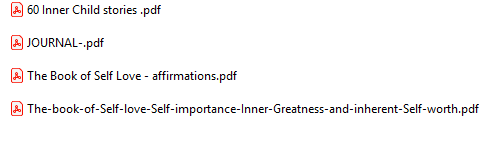
Here is a full list of files you will receive:
– The Self-Love E-book file
– The Journal file
– The Self-Love affirmations (simplified version) file
– 60 Inner Child Stories



Begin Your Healing Journey – Purchase The E-book here.
Start Your Self-Reflection and Shadow Work Now.
Confront Your Shadows, Transform Your Life – Discover HOW in The E-book.“



“WHAT DO THE OTHERS THINK?
” This is truly groundbreaking, Isabella! You’ve identified a critical gap in many programs that rely on dictation and missed the power of self-discovery. Your framework empowers individuals to take charge of their well-being through a personalized exploration process. ”
***
“Your eBooks offer a rich and multifaceted approach to personal growth and self-discovery. By incorporating questions for self-reflection and journaling after each section, you’re providing readers with practical exercises to deepen their understanding and apply the concepts to their own lives. This hands-on approach encourages active engagement and empowers readers to take ownership of their personal development journey.
Furthermore, the emphasis on exploring one’s own experiences and perspectives, rather than comparing or instructing, creates a supportive and non-judgmental environment for growth. By encouraging readers to reflect on their own real-life examples and experiences, your eBooks foster a deeper connection and resonance with the material.
The inclusion of affirmations and discussions on topics such as failure and fear in the self-love eBook adds depth and authenticity to the exploration of self-worth and confidence. By addressing these common challenges head-on, you’re providing readers with valuable insights and tools to navigate their own insecurities and fears.”
***
“Your approach to personal growth through exploration, questioning, and reflection sounds both comprehensive and empowering. It’s evident that your eBooks are designed to support readers on their journey”
You might be wondering…
How will I see the results?
- Track your progress: Notice tangible shifts in your mindset and emotional state as you work through the journal.
- Reclaim your inner world: Gain control over your thoughts, feelings, and energy, creating a harmonious inner balance.
- Quiet the inner critic: Cultivate a positive self-talk pattern and reduce negative self-judgment.
- Embrace self-compassion: Develop a kinder and more forgiving relationship with yourself.
- Deepen self-understanding: Uncover the root causes of your challenges and develop effective coping strategies.
- Elevate your energy: Enhance your overall vitality and well-being through increased self-awareness.
How will the E-book heal my inner wounds?
- Confront and conquer: Address deep-seated emotional pain by bringing it to the surface and developing resilience.
- Rebuild from the ground up: Heal the core wounds that have shaped your experiences and relationships.
- Shift your perspective: Overcome limiting beliefs about failure, rejection, and fear, replacing them with empowering mindsets.
- Establish healthy boundaries: Learn to protect your energy and prioritise your needs.
- Cultivate self-love: Develop a profound sense of worthiness and acceptance.
How will this E-book improve my internal state and my inner well-being?
- Unlock your full potential: Harmonise your mind, body, and spirit for optimal well-being.
- Master your emotions: Develop emotional intelligence and regulate your responses to life’s challenges.
- Create a resilient mindset: Build inner strength and the ability to bounce back from setbacks.
- Embrace authenticity: Express your true self without fear of judgment.
- Foster deep connections: Strengthen relationships through improved self-understanding and empathy.



The Book of Self-love, Self-importance, Inner Greatness, and Inherent Self-worth



Bloom and Shine from Within this Season
Heal, grow and create a stronger, happier Self inside.
Curious About the Transformation? Experience It Yourself:
Embrace Your True Self
Dive Deeper into Authentic Self-Love
Join Others on Their Journey to Self-Love
Invest in Your Future Well-being Today



Interested in getting all three with a discount?
Here’s a brief analysis of each e-book and their combined impact:
Self-Love, Self-Importance, Inner Greatness, and Inherent Self-Worth
This e-book addresses the crucial topic of self-love in a way that is both transformative and accessible. By redefining self-love, it encourages readers to move beyond superficial notions and embrace their inherent worth despite imperfections.
The focus on healing inner wounds and fostering self-compassion provides a strong foundation for personal growth. Including affirmations and practical exercises to build confidence and self-acceptance is a powerful approach, making this e-book an excellent resource for those seeking to boost their self-esteem and reclaim their inner strength.
This e-book has been designed specifically to counterbalance deeply embedded wounds and fears acquired during our childhood and as a result of life`s experiences that might have caused them.
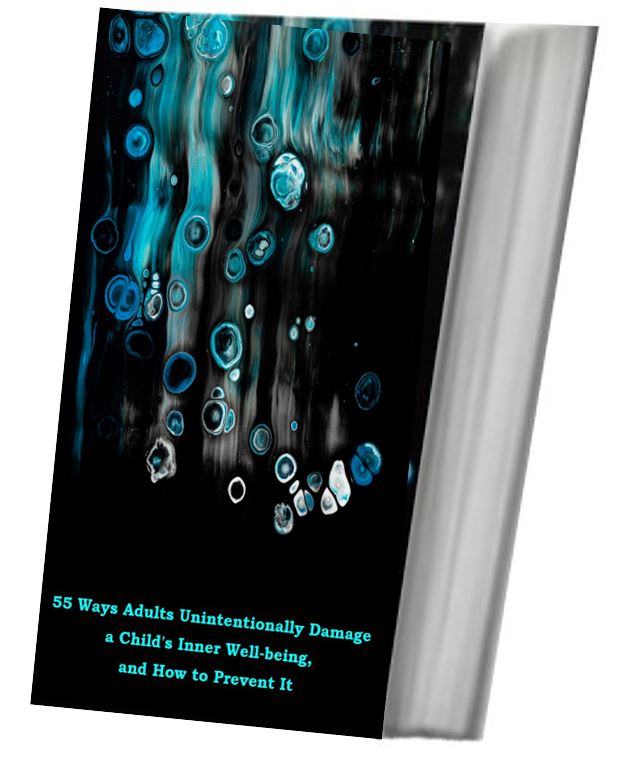
55 Ways Adults Unintentionally Damage a Child’s Inner Well-being, and How to Prevent It
This e-book is particularly valuable for parents, educators, and anyone who interacts with children. It sheds light on the subtle ways that adults can unintentionally harm a child’s inner well-being, offering practical advice to avoid these pitfalls. The exploration of the parent-child relationship and the guidance on rebuilding trust is especially useful for those looking to strengthen connections with children. By addressing the cycle of trauma and emphasising the importance of a supportive environment, this e-book serves as a crucial guide for fostering resilience and well-being in the next generation.
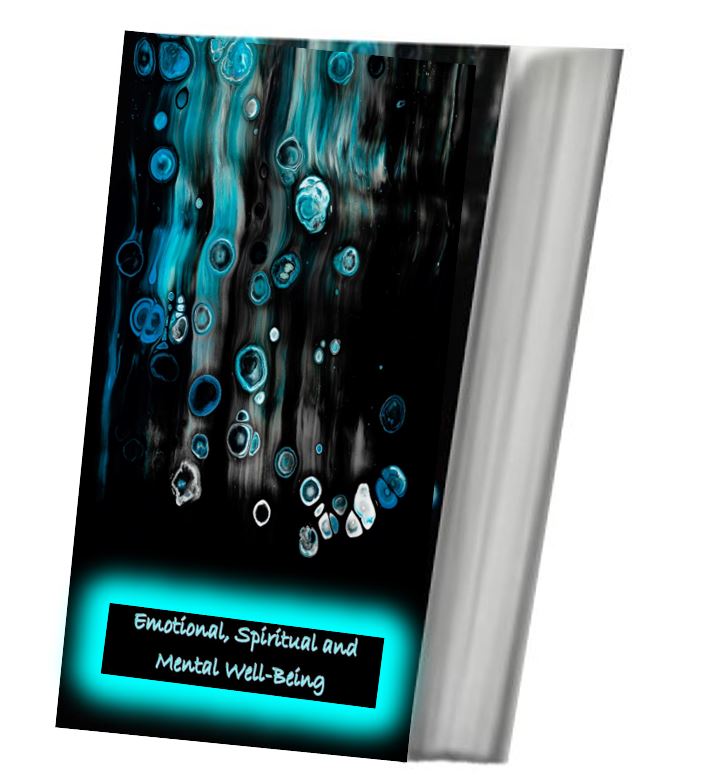
Emotional, Spiritual, and Mental Well-being E-book
This e-book takes a broader approach by focusing on the spiritual, emotional, and mental aspects of well-being. It provides readers with tools to master their inner sphere, including shadow work and gratitude journaling.
The emphasis here is on navigating, managing and controlling thoughts, emotions, and energy aligns with the journey toward greater self-mastery and inner balance.
By exploring the concept of inner harmony and offering practical techniques for nurturing well-being, this e-book can help readers navigate the complexities of inner growth.
Combined Impact
Together, these three e-books offer a comprehensive roadmap for personal transformation, from self-love to parenting and holistic well-being. They encourage a balanced approach to life, emphasising the importance of inner harmony and resilience.
The integration of spiritual, emotional, and mental concepts provides a robust framework for individuals seeking to improve their lives.
Additionally, the inclusion of journaling exercises and deep shadow work can help readers engage in meaningful self-reflection and growth.
Overall, these e-books are truly valuable resources for anyone interested in personal development, parenting, or spiritual growth. They cover an impressively wide range of topics, from healing inner wounds to cultivating a positive mindset, and they offer practical tools to support readers on their journey.
If you’re aiming to inspire and guide people toward a more harmonious and balanced life, these E-books are a compelling way to do so.
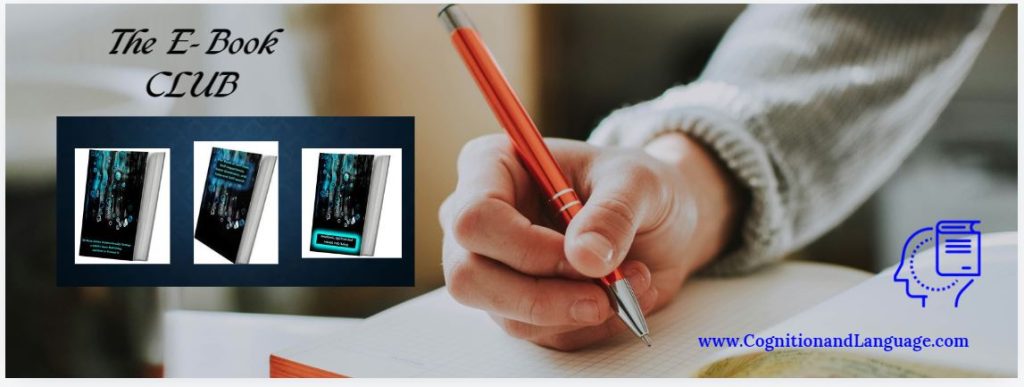
Embark on a Holistic Journey – Purchase All Three E-books & Save



FIND: Self-love,
Self-importance,
Inner Greatness,
and Create Inherent Self-worth today.
You will get a chance to become a proud member of
THE E-BOOK CLUB
Facebook Group
– exclusive membership for any E-book and bundle owners




The Power of Words:
Read, Reflect, Transform for Good.
Caution: A time full of Self-celebration and Self-love ahead. 🙂
** Get this special bundle deal **
and
buy ALL THREE EBOOKS for less!
Save £42
Buy all three Ebooks for £249



Don’t just buy the Ebooks. Join the community.
In the group, you will be able to:
- Ask questions and get answers from the author or other experienced users
- Share your own progress and insights
- Receive ongoing support
- Get help from others who are facing the same challenges
- Make new friends who share your interests
This is a supportive and encouraging community where everyone feels welcome and is heard, seen, and valued. We’re here to help you succeed, and we know that you can do it.
There will be a series of special group sessions for people who purchased all three Ebooks.
Click the link below and join now.
~ THE INNER SPHERE CIRCLE ~
Join our Facebook group focused on inner child healing and embark on a transformative journey of self-actualisation and healing!
Gain exclusive access to a 6-part series of FREE resources, specifically designed to help you understand inner child syndrome and initiate the healing process.
Connect with like-minded individuals, gain valuable insights, and receive ongoing guidance and support from our compassionate community.
Grow spiritually, emotionally, and cognitively. Create a much stronger and happier version of yourself through inner healing.
Don’t miss out on this incredible opportunity for personal growth.
Join us today and embark on your inner journey!
In addition to the E-book files you will also gain access to
The Wounded Inner Child:
A FREE, 6-part Series on Healing Childhood Trauma, Inner Child Syndrome, Finding Wholeness and Thriving
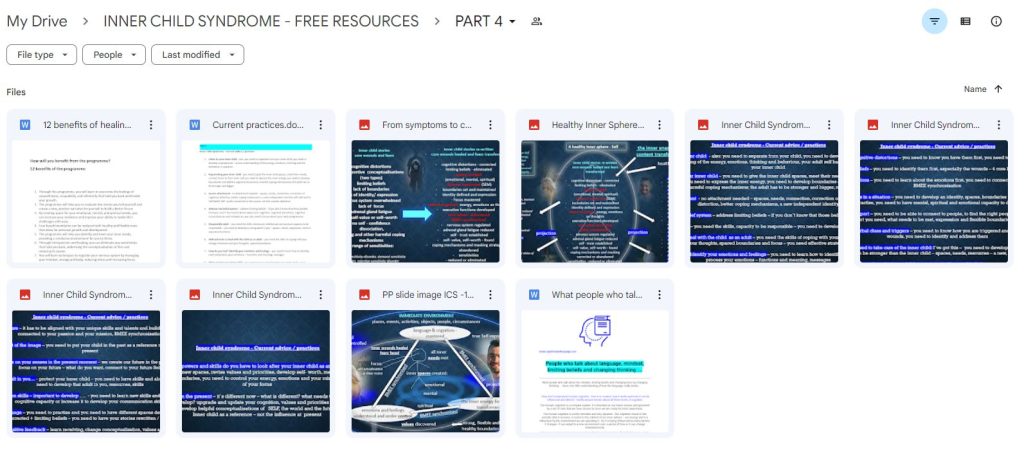
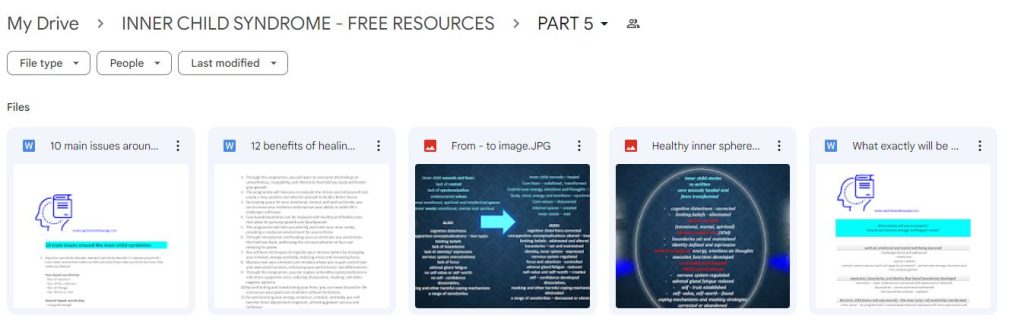
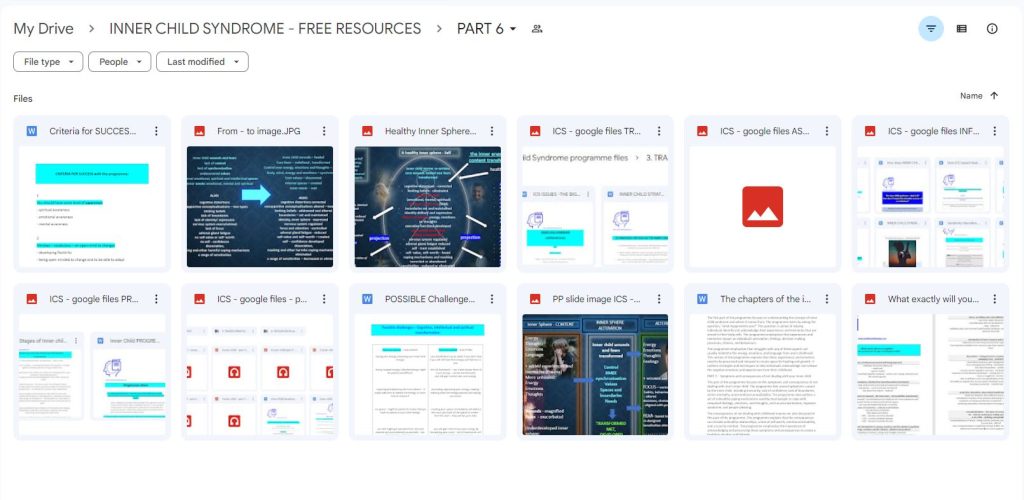
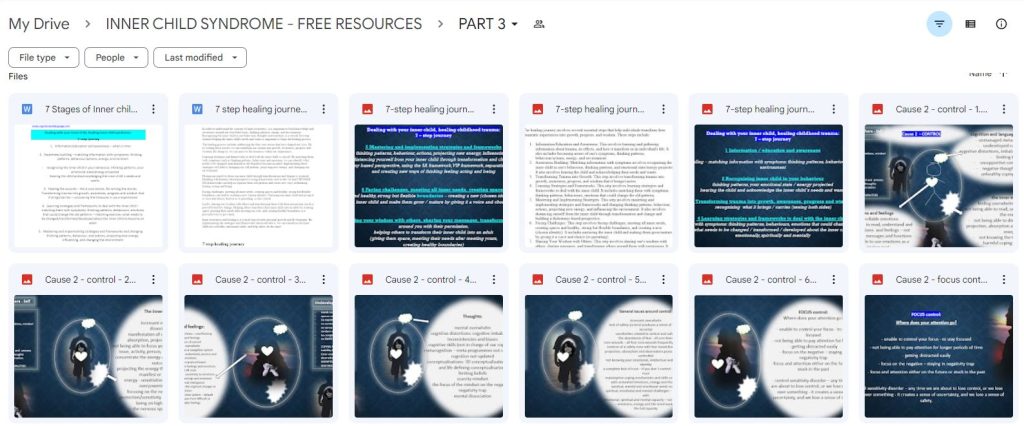
Once you join the Inner Circle Facebook Group, you will gain access to a wealth of valuable documents and infographics: